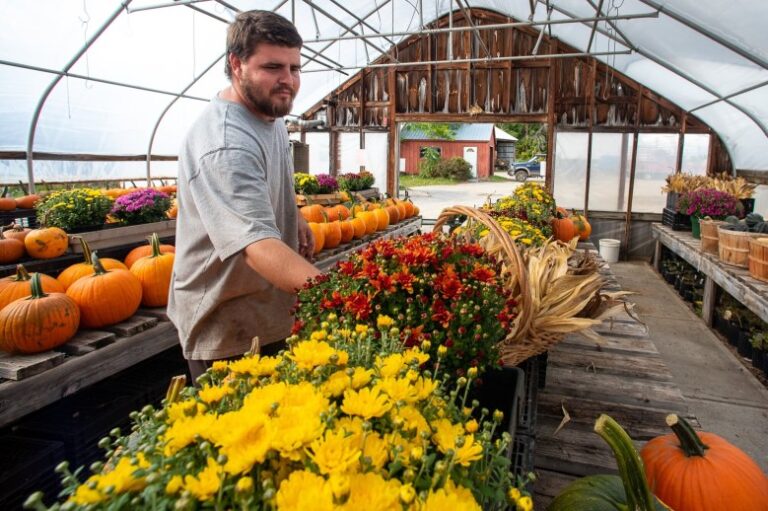
Chris Wallace, owner of a home-based farm in Gibsonville, shows off several of his young plants for sale at the "Return to Our Roots" event on Saturday.
This past Saturday, the “Return to Our Roots” event took place at West End Mini Mart in Salisbury, offering community members a valuable crash course on sustainability and self-sufficiency. Organized by Tonya Cross of the Rooted and Rising Collective, this grassroots initiative aims to empower individuals by emphasizing the importance of local food sources and organic certifications in everyday life.
The “Return to Our Roots” event featured workshops on organic gardening, composting, and sustainable living practices. Participants learned hands-on techniques to grow their own vegetables, reduce waste through composting, and understand the benefits of choosing organic-certified products. Cross highlighted, “By reconnecting with our food sources, we can foster a healthier community and environment.” These workshops are not just informative—they promote an active lifestyle centered around sustainable choices.
For shoppers and eaters who prioritize clean-label, organic-certified grocery choices, events like these emphasize the growing trend towards self-sufficiency. The demand for transparency in food sourcing is at an all-time high. As people become more aware of the environmental impacts of industrial farming, they seek to know where their food comes from and how it’s grown. The knowledge shared during this event equips attendees with practical skills that allow them to make informed choices about the food they consume, thereby contributing to their health and the wellbeing of the planet.
Business owners and professionals in the grocery sector should take note of this fundamental shift. As consumers increasingly gravitate towards local and organic options, establishing partnerships with local farmers and producers can ensure that businesses remain competitive. Investing in eco-friendly practices not only attracts a conscientious customer base but also fulfills a growing ethical obligation to foster sustainable practices.
On a broader scale, this event reflects a larger trend across the U.S. and Canada towards community-driven agriculture. With the rise of community-supported agriculture (CSA) programs and farmer’s markets, cities are witnessing a renaissance in local food systems. This movement is creating more opportunities for consumers to support organic farming while also benefitting from fresh, seasonal produce.
As you reflect on these developments, consider these questions:
1. How can you incorporate sustainable practices into your shopping habits?
2. What resources are available in your community that promote organic farming and local produce?
3. In what ways can businesses enhance transparency in their food sourcing to meet consumer demands?
By engaging with these questions, you can deepen your commitment to sustainability and support the growing movement towards organic, clean-label food choices.
——————–
Este pasado sábado, el evento “Return to Our Roots” tuvo lugar en el West End Mini Mart en Salisbury, ofreciendo a los miembros de la comunidad un valioso curso intensivo sobre sostenibilidad y autosuficiencia. Organizado por Tonya Cross del Rooted and Rising Collective, esta iniciativa comunitaria tiene como objetivo empoderar a los individuos enfatizando la importancia de las fuentes alimentarias locales y las certificaciones orgánicas en la vida cotidiana.
El evento “Return to Our Roots” presentó talleres sobre jardinería orgánica, compostaje y prácticas de vida sostenible. Los participantes aprendieron técnicas prácticas para cultivar sus propios vegetales, reducir desperdicios a través del compostaje y comprender los beneficios de elegir productos certificados como orgánicos. Cross destacó: “Al reconectar con nuestras fuentes de alimentos, podemos fomentar una comunidad y un ambiente más saludables”. Estos talleres no solo son informativos, sino que promueven un estilo de vida activo centrado en elecciones sostenibles.
Para los compradores y comensales que priorizan opciones de compra limpias y certificadas como orgánicas, eventos como este enfatizan la creciente tendencia hacia la autosuficiencia. La demanda de transparencia en el abastecimiento de alimentos está en su punto más alto. A medida que las personas se vuelven más conscientes de los impactos ambientales de la agricultura industrial, buscan saber de dónde provienen sus alimentos y cómo se cultivan. Los conocimientos compartidos durante este evento equipan a los asistentes con habilidades prácticas que les permiten tomar decisiones informadas sobre los alimentos que consumen, contribuyendo así a su salud y al bienestar del planeta.
Los propietarios de negocios y profesionales en el sector de alimentos deben tomar nota de este cambio fundamental. A medida que los consumidores gravitan cada vez más hacia opciones locales y orgánicas, establecer asociaciones con agriculturas locales y productores puede asegurar que los negocios sigan siendo competitivos. Invertir en prácticas ecológicas no solo atrae a una base de clientes conscientes, sino que también cumple con una creciente obligación ética de fomentar prácticas sostenibles.
A gran escala, este evento refleja una tendencia más amplia en los EE. UU. y Canadá hacia la agricultura impulsada por la comunidad. Con el auge de los programas de agricultura apoyada por la comunidad (CSA) y los mercados de agricultores, las ciudades están presenciando un renacimiento en los sistemas alimentarios locales. Este movimiento está creando más oportunidades para que los consumidores apoyen la agricultura orgánica mientras también se benefician de productos frescos y de temporada.
Al reflexionar sobre estos desarrollos, considere estas preguntas:
1. ¿Cómo puede incorporar prácticas sostenibles en sus hábitos de compra?
2. ¿Qué recursos están disponibles en su comunidad que promueven la agricultura orgánica y los productos locales?
3. ¿De qué manera pueden las empresas mejorar la transparencia en su abastecimiento de alimentos para satisfacer la demanda del consumidor?
Al participar con estas preguntas, puede profundizar su compromiso con la sostenibilidad y apoyar el creciente movimiento hacia opciones alimentarias limpias y certificadas como orgánicas.